



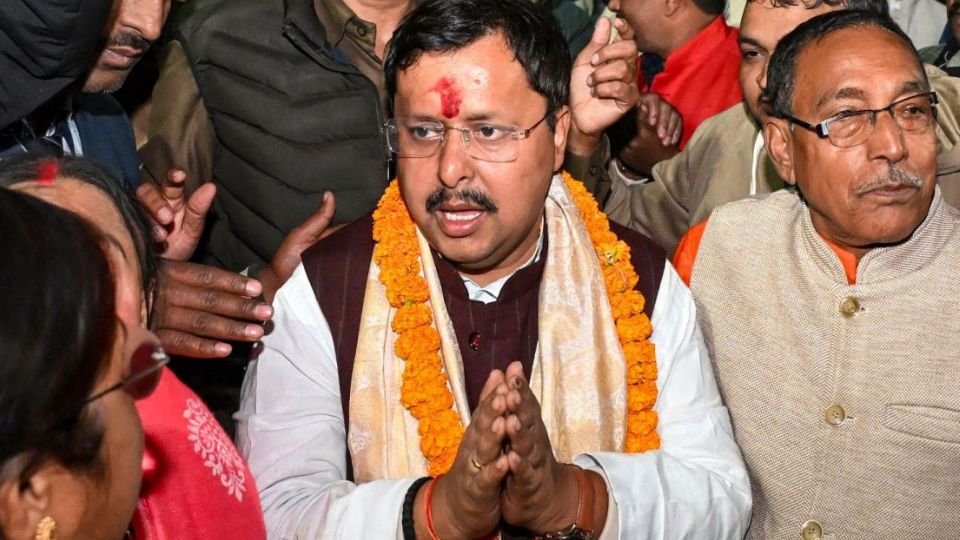
The BJP’s decision to appoint Nitin Nabin as its new working president has set off discussions within political circles, especially since this is only the second time in the party’s history that such a post has been used. The appointment is significant not just for its timing but also for what it signals about the party’s future leadership structure.
Although the BJP constitution does not mention a “working president,” the role has emerged as a transitional step before a leader formally takes charge of the party. The only previous example is J P Nadda, who briefly served as working president in 2019 after Amit Shah became Union Home Minister. Nadda later assumed full leadership in early 2020 and has now completed nearly six years as party chief, the maximum allowed under BJP rules.
According to party insiders, Nabin’s selection is an interim arrangement shaped both by political strategy and cultural considerations. The period of Khar Maas, regarded as inauspicious in Hindu tradition, begins immediately, which means a formal leadership election cannot be held until after January 14, when Makar Sankranti marks its end. The BJP has therefore elevated Nabin for continuity, ensuring that organisational work continues smoothly until a new president is formally elected.
The party has already concluded organisational elections in 30 of 37 states and Union Territories—a prerequisite for initiating the national president’s election. Leaders say the internal poll process will take around four days once it begins and could be completed soon after mid-January. Given the BJP’s emphasis on consensus and its close coordination with the RSS, Nabin’s eventual election as national president is widely viewed as all but assured.
For now, Nitin Nabin is expected to work closely with J P Nadda, mirroring the way Nadda once learned the ropes under Amit Shah. This period will allow him to understand the nuances of national-level party management before he formally assumes the top post.
At 45, Nabin represents a younger generation of leadership within the BJP. Currently serving as Bihar’s Road Construction Minister, he is a five-time MLA from Bankipur in Patna, having first entered the Assembly at age 26 after the seat fell vacant following the death of his father, senior BJP leader Navin Kishore Sinha. If chosen as the next president, he will become the first BJP chief from Bihar and the youngest to hold the post, surpassing Nitin Gadkari, who took charge at 52.
Prime Minister Narendra Modi has publicly applauded Nabin’s rise, praising his commitment, organisational skills and grounded approach. Modi noted that Nabin has consistently demonstrated dedication both as an MLA and as a minister, and expressed confidence that his leadership would strengthen the party in the years ahead. Nabin has previously handled key responsibilities within the organisation, including serving as BJP in-charge for Chhattisgarh and Sikkim.
As the BJP prepares for a busy political year ahead, Nabin’s appointment signals a shift toward younger leadership while preserving continuity at the top. The coming weeks will confirm whether this transitional role indeed becomes his launchpad to becoming the party’s next national president.

