



Kozhikode:
Retired NASA astronaut Sunita Williams admits she will feel a sense of “FOMO” as humanity prepares to return to the Moon—but says she is equally content discovering the wonders of Earth after spending nearly two years of her life in space.
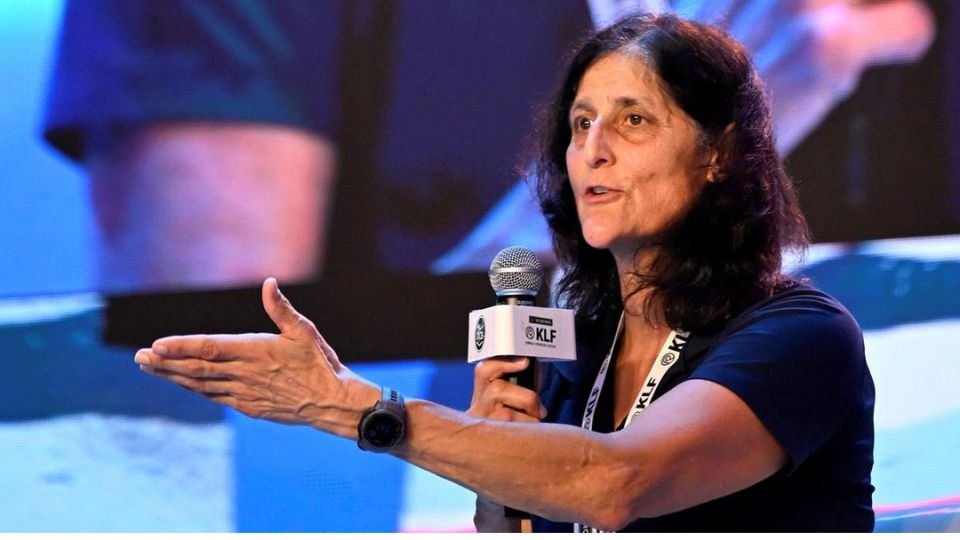
Speaking at the opening evening of the Kerala Literature Festival, Williams reflected on her 27-year career with NASA, her record-breaking time in orbit, and the deeply human moments she missed while living aboard the International Space Station.
With NASA gearing up for the Artemis programme’s first crewed lunar mission since 1972, Williams acknowledged that watching fellow astronauts head to the Moon will be bittersweet. “Who doesn’t want to go to the Moon?” she said, recalling that lunar exploration was one of the original reasons she wanted to join NASA. “Of course I will have FOMO—but I’m excited to see my friends and fellow human beings take this step.”
NASA’s Artemis II mission, scheduled for 2026, will send four astronauts on a crewed flight around the Moon, marking a historic return to lunar exploration.
Now retired at 60, Williams says she is filling her time by travelling and reconnecting with places she once viewed only from orbit. Kerala, she told the audience, is one such destination she is delighted to finally experience on Earth.
Over her career, Williams logged 608 days in space—the second-highest total for a NASA astronaut—and completed nine spacewalks totaling more than 62 hours, the most by any woman. She also shares the sixth-longest single American spaceflight, spending 286 consecutive days in orbit alongside astronaut Butch Wilmore during NASA’s Starliner and Crew-9 missions.
Despite her extraordinary résumé, Williams downplayed her achievements, describing them simply as part of the job. Even during a tense episode when technical issues extended what was meant to be an eight-day ISS mission into a nine-month stay, she said fear never took over. Trust—in her training, her colleagues on the ground, and Wilmore sitting beside her—was what guided her through the crisis.
What she missed most in space, Williams said, were the small sensory joys of life on Earth: rain on her skin, wind on her face, sand under her feet, and especially time with her dogs. Looking at Earth from orbit filled her with awe, but also with a quiet ache at being unable to fully participate in the life unfolding below.
Born in Ohio to a Gujarati father from Mehsana district in Gujarat and a Slovenian mother, Williams used the occasion to thank India for embracing her as its own. She recalled being overwhelmed when she learned that people across India had prayed for her safe return during her first mission—a gesture she initially found hard to believe until she saw it for herself.
As she steps away from spaceflight, Williams says her perspective has only deepened. The planet she once orbited for hundreds of days now feels more precious than ever. “This is our planet,” she told the audience, “where people live, animals move, fish swim and trees grow—and being part of that again is something I truly cherish.”
The Kerala Literature Festival 2026, now in its ninth edition, concludes on January 25 and features over 400 speakers from literature, science, history and public life.

