



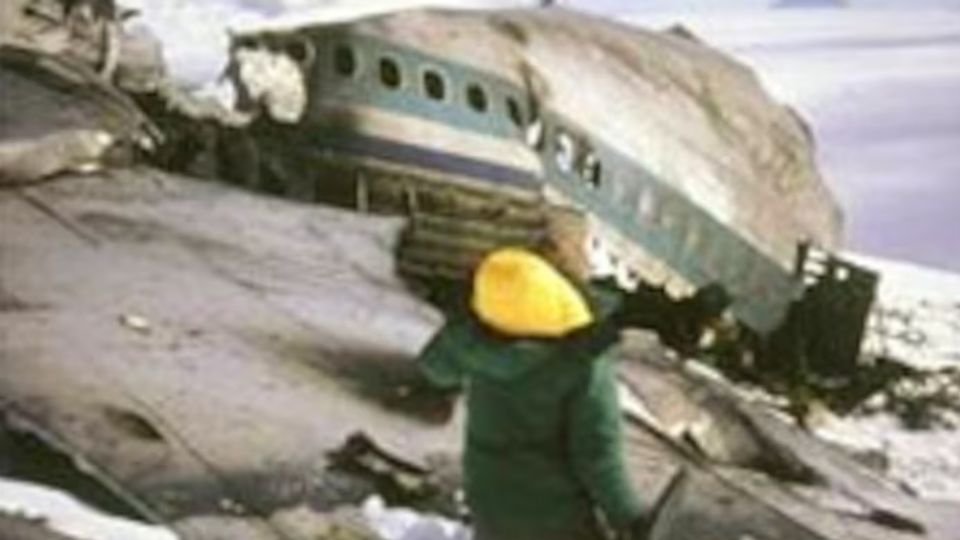
Nearly half a century later, the crash of Air New Zealand Flight TE901 into Antarctica’s Mount Erebus remains one of aviation history’s most unsettling tragedies—a catastrophe born not of a single dramatic failure, but of human error, environmental deception and tragic misjudgment.
On November 28, 1979, a DC-10 aircraft operated by Air New Zealand departed on what was marketed as a rare, scenic sightseeing journey over Antarctica. The flight, numbered Air New Zealand Flight TE901, carried 237 passengers and 20 crew members, many eager to witness the frozen continent from the air. None would return.
Instead of flying safely over flat Antarctic ice, the aircraft slammed into the slopes of Mount Erebus, Antarctica’s highest active volcano. The impact killed everyone on board instantly, marking New Zealand’s deadliest civil aviation disaster.
The tragedy has recently resurfaced in public discussion after a viral post on X drew attention to the final moments of the flight. The post highlighted a cruel phenomenon known as “sector whiteout,” an optical illusion where snow-covered terrain blends seamlessly with the sky, erasing visual depth and making mountains appear invisible. Investigators later concluded that the pilots believed they were flying over flat ice when, in reality, they were heading straight toward rising volcanic terrain.
Subsequent inquiries revealed that the disaster was not caused by weather alone. A critical factor was an uncommunicated change in the aircraft’s flight coordinates, which rerouted the plane directly toward Mount Erebus. The crew, unaware of the alteration, relied on instruments and visual cues that proved fatally misleading in the Antarctic environment.
For years, the official narrative placed much of the blame on pilot error. However, later investigations shifted responsibility toward systemic failures, including navigation data errors, inadequate briefings, and institutional shortcomings within the airline. The case became a landmark example of how organizational culture and communication failures can be just as deadly as mechanical faults.
Today, the Mount Erebus disaster is remembered not only for its scale but for its haunting nature—a modern aircraft, fully functional, flying under clear instructions, undone by a white horizon and a mountain no one could see until it was too late. The story continues to resurface because it serves as a stark reminder: even in an age of advanced technology, aviation remains vulnerable to the limits of human perception and institutional accountability.

