



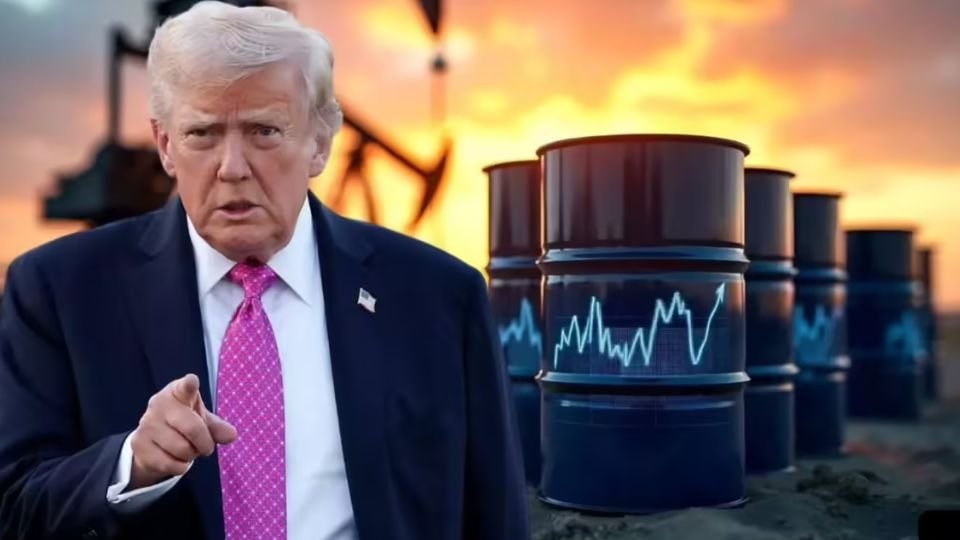
The United States government has outlined a bold new strategy to manage Venezuela’s oil exports indefinitely, as the Trump administration seeks to reintegrate the South American nation’s vast crude resources into global markets under US supervision. The plan was detailed by US Energy Secretary Chris Wright at a recent conference in Miami, marking Washington’s clearest statement yet on its approach to Venezuelan energy assets following the removal of Nicolás Maduro from power.
Wright said the initial phase will focus on marketing Venezuela’s stored crude, which has accumulated amid a US-led blockade and threatened to push production offline. “We’re going to get that crude moving again and sell it,” Wright explained. “And then, indefinitely going forward, we will sell the production that comes out of Venezuela.”
The administration’s policy aims to revive Venezuela’s faltering oil sector, which has suffered years of underinvestment, corruption and infrastructure decay, leaving output below 1 million barrels per day. As part of this strategy, the US is selectively easing sanctions on the Venezuelan oil industry to attract American energy companies to help rebuild facilities and boost production.
President Donald Trump announced that Venezuela may release up to 50 million barrels of oil — worth roughly $2.8 billion at current prices — for the United States to market. According to White House Press Secretary Karoline Leavitt, sales have already begun. Revenues will be held in US Treasury accounts, officials said, shielding proceeds from claims by Venezuela’s creditors and ensuring funds ultimately benefit both Venezuelans and Americans, critics notwithstanding.
“We’re not stealing anyone’s oil,” Wright told CNBC. “We’re going to restart the selling of Venezuelan oil on global crude markets, put it in accounts in the name of Venezuela and bring those funds back into Venezuela for the benefit of the Venezuelan people.”
The administration has indicated that immediate revenues will not be used to compensate US oil firms such as Exxon Mobil and ConocoPhillips for assets seized under past Venezuelan governments, although compensation remains a longer-term issue.
Petróleos de Venezuela SA (PDVSA), the state oil company, stated it is negotiating with the US government over a sale framework, potentially similar to current arrangements with Chevron Corp., the lone major US oil company still active in Venezuela.
In parallel with export control plans, US forces have seized two additional oil tankers, including one flying a Russian flag, in a bid to assert control over sanctioned Venezuelan crude movements — underscoring the geopolitical dimension of the energy strategy.
The Trump administration is also engaging US energy executives, with meetings planned to discuss opportunities to invest in Venezuela’s oil infrastructure. A senior official said Secretary of State Marco Rubio may also participate in discussions with industry leaders — a sign of how centrally energy policy figures into broader US foreign strategy.
Experts say restoring Venezuela’s oil industry will require substantial investment, potentially $10 billion annually over the next decade, according to Francisco Monaldi, director of Latin American energy policy at Rice University’s Baker Institute. Companies weighing entry will likely seek assurances of long-term political stability and continued US support beyond the current administration.
Despite these plans, global oil futures have reacted cautiously. Prices dipped about 1.5% on Wednesday, trading near $60 per barrel as markets absorbed the implications of US control over one of the world’s largest crude reserves.
The US strategy represents a significant expansion of Washington’s role in Venezuelan energy affairs — from punitive sanctions enforcer to de facto export marketer and production manager — with potential ramifications for global oil dynamics and diplomatic ties across the region.

