



New Delhi:
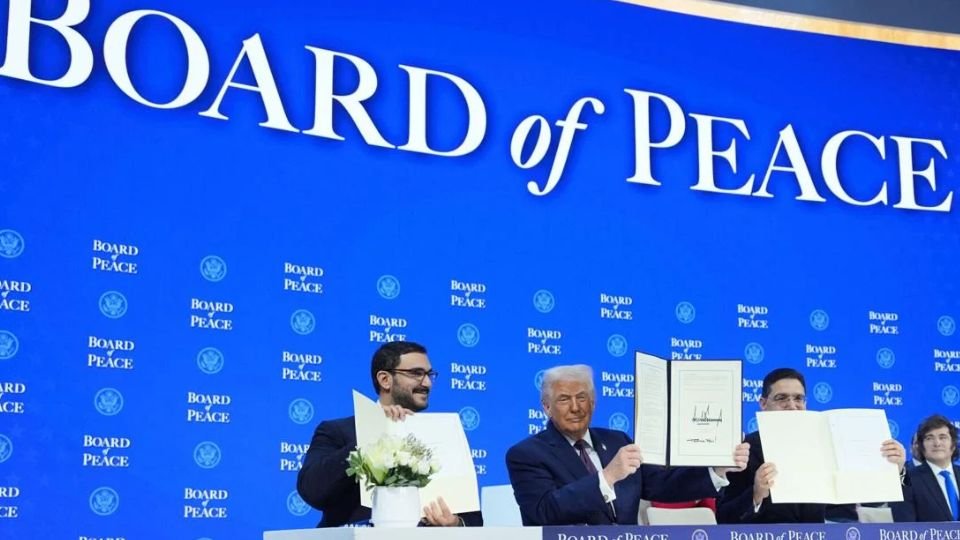
Diplomatic friction between the United States and Canada sharpened this week after US President Donald Trump withdrew an invitation for Canada to join his self-styled “Board of Peace,” following a public exchange with Canadian Prime Minister Mark Carney.
The latest spat began after Trump claimed at the World Economic Forum in Davos that “Canada lives because of the United States.” Carney swiftly rejected the assertion in a national address from Quebec City, saying Canada thrives because of its own strengths, while still acknowledging the deep and historic partnership between the two neighbors.
Trump responded hours later on his Truth Social platform, announcing that Canada’s invitation to join the “Board of Peace”—a proposed, privately funded initiative aimed at resolving global conflicts—had been rescinded. “Please let this letter serve to represent that the Board of Peace is withdrawing its invitation to you,” Trump wrote, addressing Carney directly.
A Canadian government source told AFP that Ottawa would not pay to participate in the body, though Carney had earlier indicated openness to engaging with the initiative. The exchange has highlighted widening differences between the two allied nations, even as they remain economically intertwined.
The dispute follows Carney’s high-profile speech in Davos earlier in the week, where he warned of a “rupture” in the US-led, rules-based global order. Without naming Trump, Carney argued that middle powers like Canada could no longer rely on compliance alone to ensure security and prosperity in an era of growing major-power rivalry. His remarks earned a standing ovation and global attention.
Trump, visibly irritated, referenced Carney during his own Davos address the next day. “I watched your prime minister yesterday. He wasn’t so grateful,” he said, reiterating his claim that Canada’s success depended on the United States.
Back home, Carney framed his response in broader terms, telling Canadians that the world was becoming more divided and that long-standing alliances were being “redefined and, in some cases, broken.” He positioned Canada as a democratic model at a time of global uncertainty, arguing that the country could demonstrate an alternative to authoritarianism and exclusion.
The tensions come against a complex economic backdrop. Canada sends more than three-quarters of its exports to the United States, and key sectors such as automobiles, aluminum and steel have been affected by Trump’s global tariffs. While the impact has been softened by an existing North American trade agreement, talks on revising that deal are expected to begin soon, with Trump repeatedly insisting that Washington does not need Canadian products.
Trump has also fuelled controversy with repeated remarks about annexing Canada and by sharing a social media image depicting Canada under the American flag alongside Greenland and Venezuela. Carney said his government harbors no illusions about the fragility of global relations and stressed the need to boost defense spending to protect Canadian sovereignty and borders.
As rhetoric escalates, the episode underscores a relationship under strain—one where economic dependence, shared history and diverging political visions are colliding in increasingly public ways.

