



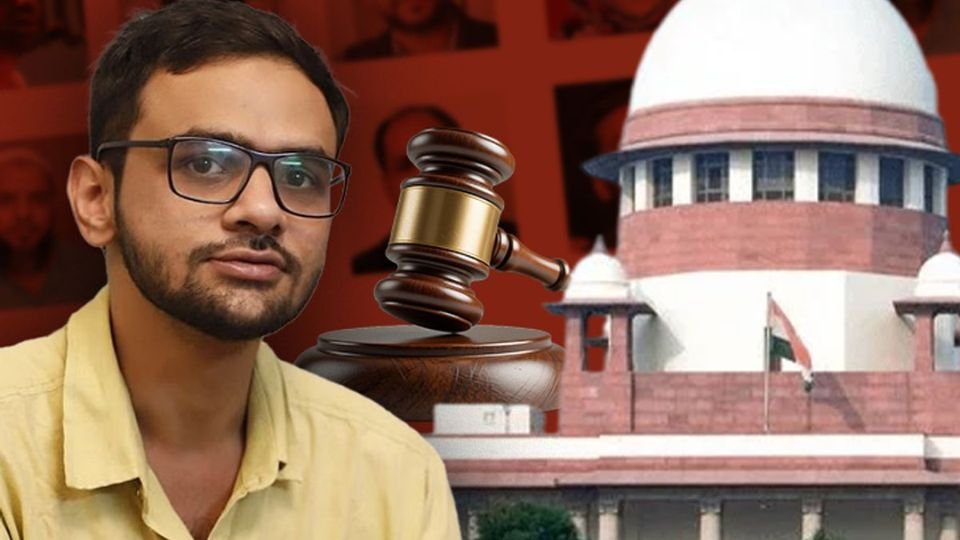
New Delhi: The Supreme Court of India began pronouncing its verdict today on the bail pleas of activists Umar Khalid, Sharjeel Imam, and five other accused who challenged the Delhi High Court’s order denying them bail in the 2020 north-east Delhi riots “larger conspiracy” case under the stringent Unlawful Activities (Prevention) Act (UAPA). The bench comprising Justices Aravind Kumar and N.V. Anjaria had reserved the verdict on December 10, 2025, after hearing detailed arguments from all sides.
The accused, including Gulfisha Fatima, Meeran Haider, Shifa Ur Rehman, Mohd Saleem Khan, and Shadab Ahmed, have been in judicial custody for more than five years, facing serious UAPA charges linked to the February 2020 riots, which resulted in 53 deaths and over 700 injuries, and led to the registration of more than 750 FIRs across Delhi.
During the hearings, the defence strongly argued that the prolonged detention was primarily due to delay in the trial process, emphasizing that no direct evidence has emerged to prove that the accused instigated violence, despite five years passing since the incident.
Opposing the bail pleas, the Delhi Police maintained that the riots were not spontaneous but part of a deep-rooted, pre-planned, pan-India conspiracy allegedly intended to destabilize the state and draw global attention to protests against the Citizenship Amendment Act (CAA). The prosecution claimed that the alleged conspiracy was timed to coincide with the official visit of the then US President to India, to maximize international media coverage.
Delhi Police further referred to digital evidence, WhatsApp groups, and speeches attributed to Khalid and Imam, alleging their role to be prima facie grave, including accusations of delivering inflammatory communal speeches to mobilize crowds. The police also argued that trial delays were partly due to lack of cooperation by the accused and assured the court that the trial could conclude within two years if cooperation is extended.
The verdict today will determine whether the activists remain in custody as the trial continues or secure bail after years of incarceration. The decision is expected to shape legal discourse on personal liberty vs national security in long-pending UAPA cases.

