



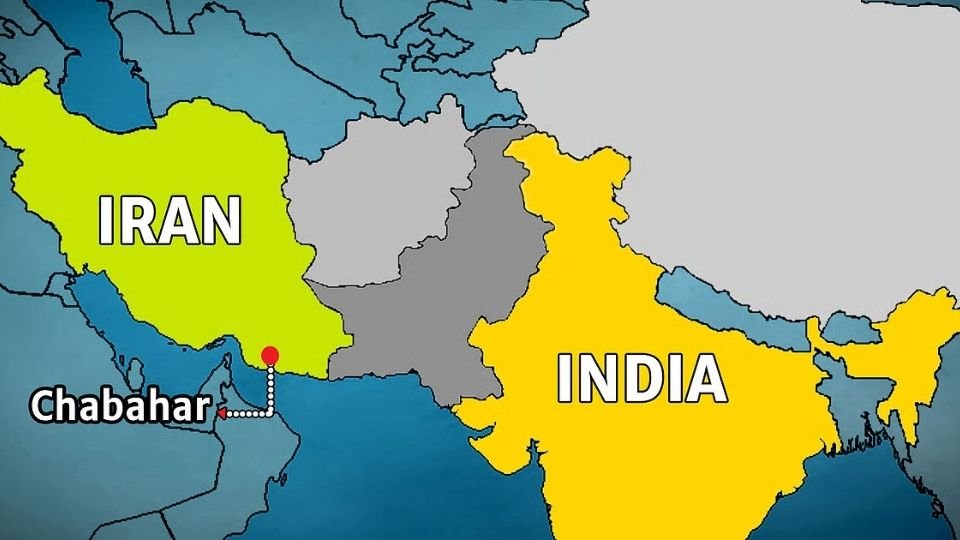
As mass protests challenge Iran’s clerical establishment, New Delhi is watching developments with growing concern. While regime change in Tehran may appear to weaken a long-standing US adversary, the ripple effects of instability in Iran could significantly narrow India’s strategic space in West and Central Asia—while opening new opportunities for Pakistan and China.
For decades, Iran has played a quiet but crucial role in India’s regional calculus. Geography, shared interests, and historical ties made Tehran a reliable partner at a time when Pakistan blocked India’s direct land access to Afghanistan and Central Asia. Iran’s Shia leadership also acted as a counterweight to Pakistan’s influence in the Islamic world, offering New Delhi diplomatic breathing room in an otherwise hostile neighbourhood.
That balance is now under threat.
If Iran weakens or fragments internally, India risks losing one of its most important westward gateways at a time when its regional challenges are already multiplying—from political shifts in Bangladesh and persistent terrorism from Pakistan to China’s expanding footprint and volatile US policy under Donald Trump.
Iran’s Strategic Value to India
At the heart of India’s engagement with Iran lies Chabahar Port, New Delhi’s most important connectivity project in West Asia. Developed to bypass Pakistan, Chabahar provides India a direct maritime and land route to Afghanistan, Central Asia, and beyond. India has invested over $1 billion in the port and associated infrastructure, despite navigating US sanctions and diplomatic pressure.
However, such connectivity projects depend not just on physical infrastructure but also on political stability. A post-Khamenei power struggle or prolonged unrest could disrupt security guarantees, delay logistics, and make Chabahar vulnerable to shifting alliances or external influence. Analysts warn that instead of serving as India’s strategic bridge, the port could become hostage to instability.
Pakistan’s Quiet Advantage
Iran has historically limited Pakistan’s regional leverage, particularly during the 1990s and early 2000s when Islamabad backed the Taliban in Afghanistan. Tehran and New Delhi aligned closely at that time to support anti-Taliban forces, preventing Pakistan from monopolising Kabul’s political future.
Even on sensitive issues like Kashmir, Iran resisted Pakistan’s attempts to mobilise international pressure against India. That informal counterbalance helped blunt Islamabad’s regional ambitions.
A weakened Iran would remove this restraint. Pakistan may not directly benefit from chaos in Tehran, but the erosion of a regional counterweight would strengthen Islamabad’s relative position—especially in Afghanistan and West Asia.
Trade and Economic Exposure
Beyond strategy, India has economic stakes in Iran. Bilateral trade has hovered between $1.3 and $1.7 billion, making Iran one of India’s key regional trade partners. Any regime change could disrupt agreements, delay payments, and potentially expose Indian investments to political risk.
India has already adjusted its engagement with Iran to comply with US sanctions. A sudden political shift in Tehran could force New Delhi into further recalibration, potentially writing off years of economic and diplomatic investment.
China’s Expanding Shadow
While Iran has often balanced Pakistan in ways favourable to India, it has simultaneously moved closer to China. The two countries signed a 25-year strategic cooperation agreement in 2021, covering energy, infrastructure, and security cooperation. China was Iran’s largest trading partner in 2025, importing over $14.5 billion worth of Iranian goods, primarily oil sold at discounted rates due to Western sanctions.
India’s limited presence in Iran—especially through Chabahar—has acted as a modest counterweight to Beijing’s growing influence. But prolonged instability or a new regime in Tehran could push Iran even deeper into China’s orbit, as Beijing offers capital, technology, and diplomatic cover without political conditions.
Reports suggest Chinese-funded power plants and port projects are already being discussed in key Iranian provinces. For India, that would mean watching a critical neighbour drift further into China’s strategic embrace.
India’s Calculated Response
Former Indian foreign secretary Nirupama Menon Rao has cautioned against knee-jerk reactions, arguing that India must prioritise preparedness over public positioning. With outcomes in Iran impossible to predict, New Delhi’s focus should remain on protecting Indian citizens, maintaining open communication channels, and preparing for multiple scenarios.
The risk, she notes, is not limited to Iran alone. Prolonged instability in West Asia can quickly spill over into energy markets, shipping routes, diaspora security, and transnational militancy, none of which South Asia is insulated from.
For India, the challenge is clear: remain engaged without overcommitting, avoid being drawn into external power games, and preserve flexibility in a region where alliances are shifting rapidly.
If Iran stabilises, India’s long-term strategy may survive with adjustments. But if the country descends into sustained chaos or realigns sharply toward China, New Delhi could find itself strategically boxed in—while Pakistan and Beijing quietly gain ground.

