



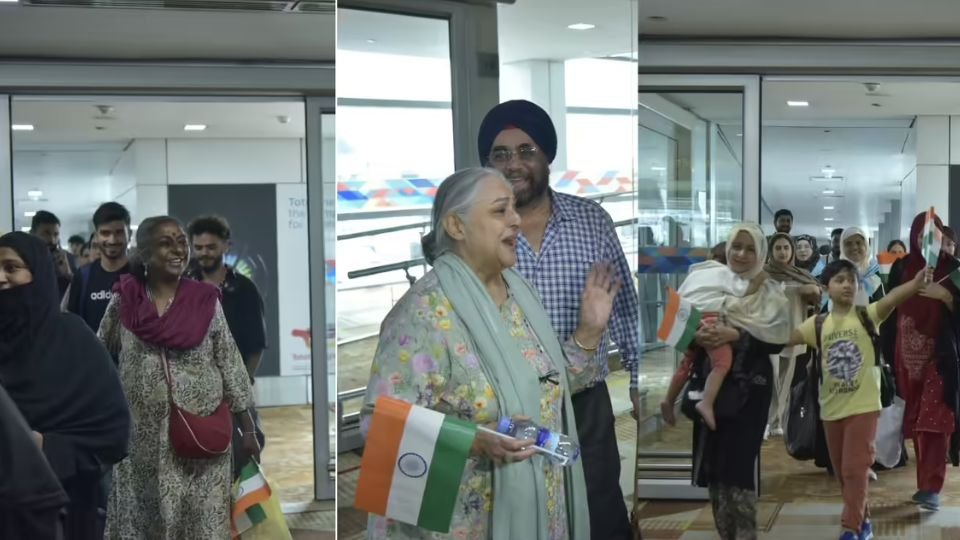
The first commercial flights carrying Indian nationals from Iran touched down in Delhi late last night, marking an early phase of civilian returns after weeks of intense protests against Iran’s clerical leadership. These flights were regular commercial operations and not part of a formal evacuation, officials clarified.
While the Indian government has not launched a full-scale evacuation, it remains on high alert and has advised citizens to avoid non-essential travel to Iran. The Ministry of External Affairs has been closely tracking developments since unrest escalated in late December, leading to widespread demonstrations and a violent crackdown in several Iranian cities.
Some air traffic between India and Iran had been disrupted on January 15 after Iranian airspace was briefly closed amid rising tensions. With flights now resuming, many Indians chose to return home, citing safety concerns and prolonged communication blackouts.
Returning nationals described a difficult environment marked by internet shutdowns and sporadic street unrest. An MBBS student who flew back to Delhi said she had heard about protests but did not witness large demonstrations firsthand, adding that the lack of internet access was the most troubling aspect. Another Indian national, who had been in Iran for over a month, said protesters occasionally blocked roads and vehicles, creating fear and uncertainty. “There was no internet, so we couldn’t contact our families or even reach the embassy at times,” he said.
Others reported that while protests were visible, they were not uniformly spread. An engineer who had travelled for work said network disruptions were his main concern and that conditions had started improving by the time he left. Another returnee noted that although some demonstrations turned violent, there were also significant numbers of people supporting the regime.
Indian nationals who returned expressed gratitude to the government and the Indian Embassy in Tehran for issuing timely advisories and maintaining contact with pilgrims, students, businesspersons and tourists during the crisis. Embassy officials had earlier said they were prepared to assist with evacuation if the situation deteriorated further.
Iran witnessed widespread protests in late December, triggered by economic distress and political discontent, with reports of thousands of deaths during a harsh security crackdown. The situation was further complicated by sharp exchanges between the Iranian leadership and US President Donald Trump, raising fears of a broader conflict. However, tensions have eased somewhat in recent days, with signs of normalcy returning to Tehran and other major cities.
India continues to monitor the situation closely, as more than 9,000 Indian citizens are currently residing in Iran.

