



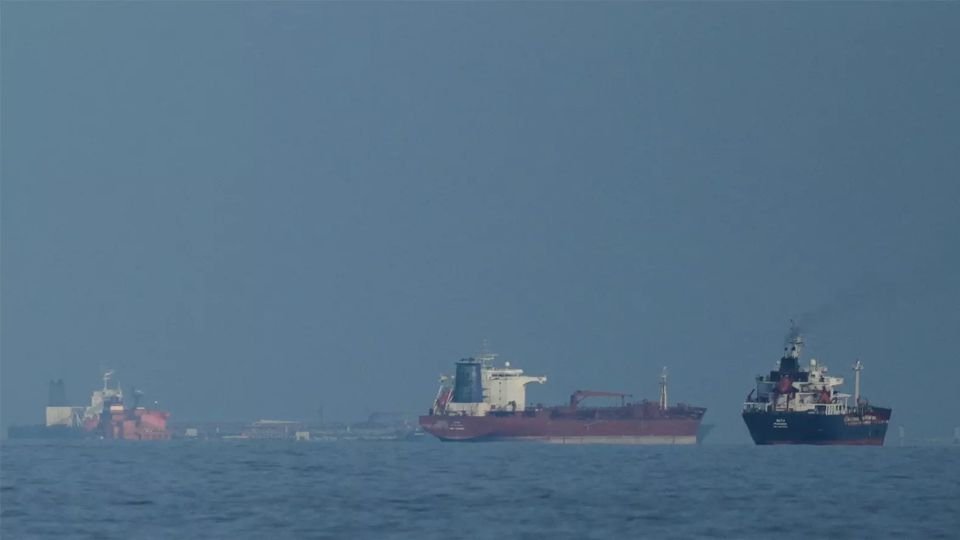
Hundreds of Indian seafarers working on merchant vessels across the Gulf region are facing growing uncertainty and fear as tensions escalate between Iran, United States, and Israel. Many sailors remain stranded at sea or in regional ports as security concerns disrupt shipping routes in one of the world’s most sensitive maritime zones.
One of them, 26-year-old Ambuj, is currently stranded near the port of Bandar Abbas. For him and many others, daily life now involves constant tension as fighter jets and drones fly overhead amid the ongoing conflict.
Speaking about the situation, Ambuj said the crew has been on high alert for over two weeks. They were first alarmed in early March when their captain reportedly received a wireless warning from the Islamic Revolutionary Guard Corps (IRGC), cautioning that any attempt to pass through the Strait of Hormuz without permission could have consequences.
“I have not been home for six months and cannot wait to see my family,” Ambuj said while waiting along with 15 other crew members and nearly 50 ships for safe passage through the strategic waterway.
According to him, the shipping company has temporarily released the crew from duty, but they remain stranded because flights from Tehran are currently not operating.
“If we get clearance to sail to the Middle East or any nearby port, we will dock there and take the earliest flight home,” he said.
Another Indian crew member, M Kanta, stationed on an India-bound vessel, described the anxiety onboard whenever aircraft or drones pass overhead.
“Our hearts sink every time a drone or fighter jet flies over the ship,” he said.
The tension escalated further when Iranian authorities ordered the ship’s Starlink satellite internet connection to be disconnected. For several days, the sailors were unable to contact their families or access verified news.
Though internet services were restored after March 6, the situation remains tense. Another crew member, whose ship is transporting bitumen and crude oil, recalled witnessing a nearby vessel struck by a drone just a few nautical miles from the Strait of Hormuz.
“Sleeping is difficult. There is constant anxiety,” he said, adding that crew members now spend time identifying aircraft, jets, or drones passing overhead.
The Ministry of External Affairs has confirmed that five Indian nationals have lost their lives and one person remains missing in incidents linked to the ongoing conflict in West Asia.
Amid the crisis, a small breakthrough came when two India-bound LPG carriers — Shivalik and Nanda Devi — successfully passed through the Strait of Hormuz.
The vessels, chartered by Indian Oil Corporation, are carrying a combined 92,700 tonnes of liquefied petroleum gas (LPG), which is crucial for domestic supply in India.
Rajesh Kumar Sinha, Special Secretary at the Ministry of Ports Shipping and Waterways, said the ships are now heading toward the western Indian ports of Mundra Port and Kandla Port, where they are expected to arrive on March 16 and 17.
However, more than 20 Indian-flagged vessels remain positioned west of the Strait of Hormuz awaiting similar clearance.
External Affairs Ministry spokesperson Randhir Jaiswal said the government is in constant contact with international stakeholders to ensure the safe movement of Indian ships and crew members.
The Strait of Hormuz remains one of the world’s most critical maritime chokepoints, handling nearly 20 per cent of global oil and liquefied natural gas shipments.
For India — the world’s third-largest supplier of seafarers with over 300,000 sailors serving on global fleets — ensuring the safety of its maritime workforce has become a growing concern alongside maintaining energy supply chains.

