



India has called for a practical and outcome-oriented approach in dealing with the Taliban, telling the United Nations Security Council that isolating the rulers of Kabul through punitive measures alone will only perpetuate the current stalemate. Speaking at the UNSC meeting on Afghanistan, India’s Permanent Representative to the UN, Ambassador Parvathaneni Harish, argued that the international community must encourage constructive behaviour rather than rely solely on deterrence.
Harish said that India supports a strategy rooted in “pragmatic engagement” and warned that exclusive dependence on punitive actions has resulted in nearly five years of stagnation. India, he added, intends to remain closely involved in Afghanistan’s development trajectory. The restoration of India’s full-fledged embassy in Kabul—upgraded from a technical mission—signals New Delhi’s renewed commitment to humanitarian assistance, infrastructure support and capacity-building initiatives in line with the aspirations of the Afghan people.
During the meeting, India condemned the deaths of women, children and athletes caused by recent airstrikes in Afghanistan, echoing concerns raised by the United Nations Assistance Mission in Afghanistan (UNAMA). Harish voiced deep alarm at what he described as “trade and transit terrorism,” referring to the denial of access routes to a landlocked nation already grappling with severe instability. Such actions, he said, violate WTO norms and amount to open coercion against a vulnerable developing country. He emphasised that these pressures contravene both the UN Charter and international law.
The envoy reiterated India’s longstanding support for Afghanistan’s sovereignty, territorial integrity and independence. Over the past two decades, India has been one of Afghanistan’s key development partners, contributing to infrastructure, healthcare, education, agriculture and governance programmes. Even after withdrawing its personnel following the Taliban’s takeover in August 2021, India maintained humanitarian channels before gradually re-establishing its diplomatic footprint.
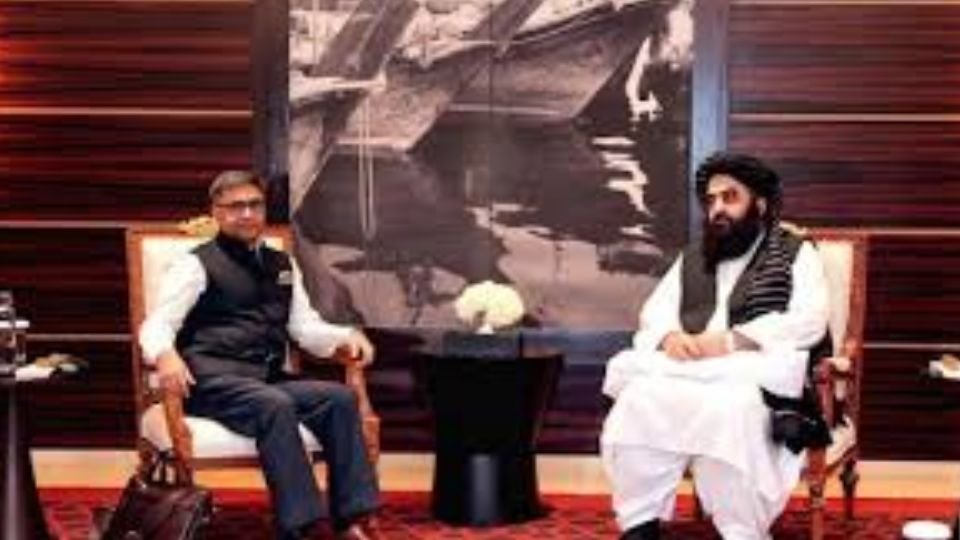
The renewed engagement gained momentum when Afghan foreign minister Amir Khan Muttaqi visited New Delhi in October, marking the first high-level Taliban visit to India since 2021. External affairs minister S. Jaishankar held extensive discussions with Muttaqi and announced the restoration of India’s full embassy operations in Kabul, committing to revive development projects paused after the Taliban’s return.
India’s remarks at the UNSC reflect a calibrated approach: firm condemnation of violence and violations of international norms, paired with a willingness to engage pragmatically to ease the suffering of the Afghan people and support long-term stability.

