



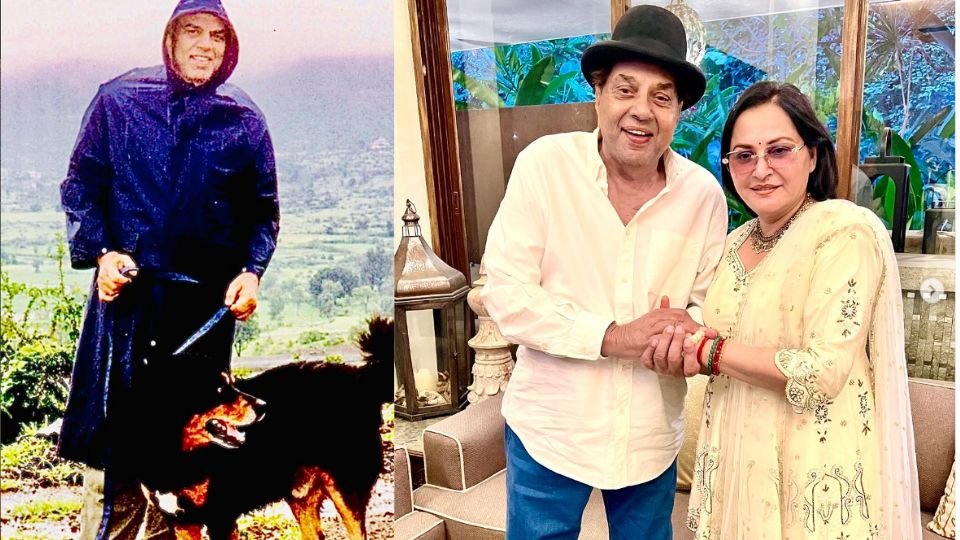
Dharmendra, one of Indian cinema’s most iconic figures, passed away on November 24, just two weeks before his 90th birthday, leaving behind a legacy that transformed the very grammar of Hindi films. At a time when Indian heroes were largely tragic, soft-spoken, and restrained, Dharmendra arrived with raw charisma, physicality and an unmistakable screen presence that changed the idea of stardom for generations.
Born Dharmendra Kewal Krishan Deol in Nasrali village of Punjab’s Ludhiana district, he grew up idolising Dilip Kumar. Films like the 1948 classic Shaheed left him dreaming of the silver screen. As a young man, he would cycle around his village searching for film posters and often asked his mirror if he could ever become another Dilip Kumar. His early years in Mumbai were full of struggle. He survived on chana, walked miles to knock on producers’ doors, and even worked at a drilling firm while living in a garage.
His break came with Arjun Hingorani’s Dil Bhi Tera Hum Bhi Tere in 1960, but true stardom arrived gradually. Through the 1960s, Dharmendra played sensitive, everyday characters in films like Anpadh, Bandini and Anupama. By the late ’60s, Phool Aur Patthar turned him into Bollywood’s first true action hero. His shirtless scene in the film shocked traditional audiences yet instantly cemented his identity as the new He-Man of Indian cinema.
Across more than six decades and over 300 films, Dharmendra created a persona that could seamlessly shift between the romantic, the macho, the emotional, and the comedic. His performances in Sholay, Seeta Aur Geeta, Mera Gaon Mera Desh, Dharam Veer, Chupke Chupke and Guddi highlighted his astonishing versatility. His dialogue delivery, often theatrical and high-energy, earned him the nickname Garam Dharam, which he later turned into a chain of Bollywood-themed restaurants.
His personal life kept him in the limelight as much as his film career. His partnership with Hema Malini, one of his most frequent co-stars, became one of Bollywood’s most talked-about relationships. Dharmendra was already married to Prakash Kaur, and rumours of his conversion to Islam to marry Hema in 1980 dominated gossip columns for years. Despite controversies, he remained a devoted family man to his six children across both marriages — including actors Sunny Deol, Bobby Deol, Esha Deol, and Ahana Deol.
The actor also had a brief political stint. He served as a BJP MP from Bikaner between 2004 and 2009 but faced criticism for his limited participation in parliamentary proceedings. He was honoured with the Padma Bhushan in 2012.
Even as age slowed him down, Dharmendra continued acting. His later performances in Life in a… Metro, Apne and the Yamla Pagla Deewana series were widely appreciated. In 2023, he made a memorable comeback in Rocky Aur Rani Kii Prem Kahaani. His final film, Ikkis, is slated for release on December 25.
For millions, Dharmendra was more than just an actor. He was a cultural phenomenon — the original “Greek God” of Bollywood, the rugged hero who made brawn fashionable, the romantic who made generations swoon, and the performer whose sincerity remained intact through changing eras of cinema.
As India bids farewell, Dharmendra’s legacy remains etched in the collective memory of film lovers. A star of unmatched charm, a poet at heart, and a man who defined an era — Dharam truly changed the dharam of Indian cinema.

