



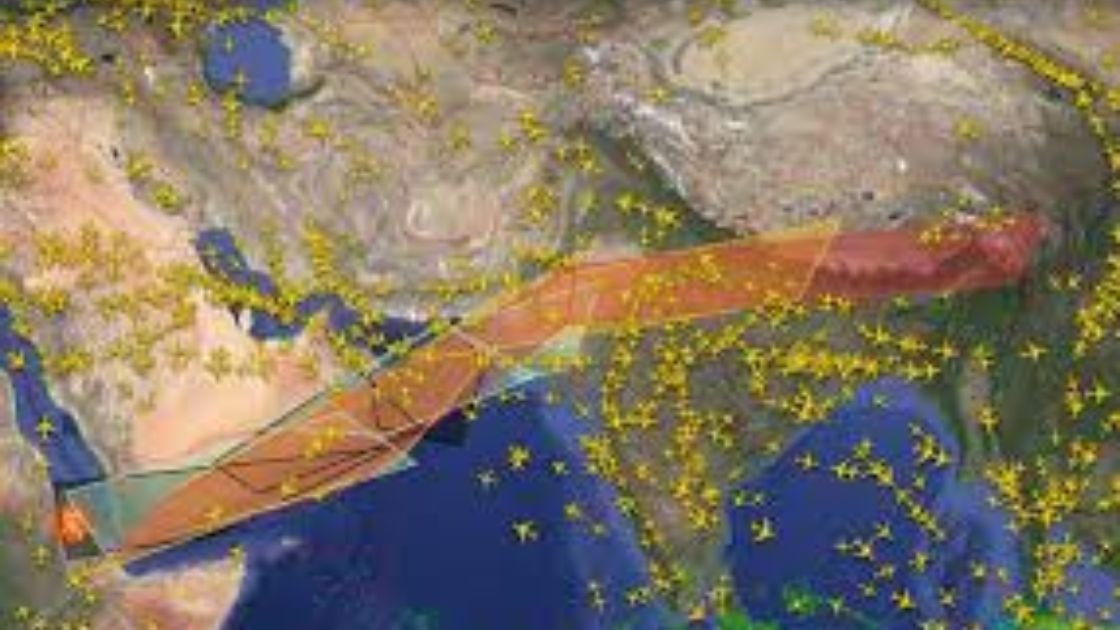
New Delhi is facing a rare and unexpected air hazard after the Hayli Gubbi volcano in Ethiopia erupted for the first time in nearly 12,000 years, sending massive ash plumes across continents and into northern India late Sunday night.
Ash Travels Thousands of Kilometres, Enters Indian Skies
The volcano, located in Ethiopia’s Afar region, erupted early Sunday, propelling thick smoke and ash up to 14 km high into the atmosphere.
With upper-level winds moving at 100–120 km/h, the ash cloud travelled rapidly across the Red Sea, Yemen, Oman, the Arabian Sea, and eventually entered Gujarat, Rajasthan, Delhi, Haryana, and Punjab.
Delhi, already battling hazardous pollution levels, experienced further deterioration with the arrival of volcanic ash.
According to the India Meteorological Department (IMD), the ash clouds will move towards China and are expected to clear Indian airspace by 7:30 pm today.
Aviation Impact: Dozens of Flights Cancelled
India’s aviation regulator DGCA issued an urgent advisory instructing airlines to avoid volcanic ash-affected air routes and alter their flight paths immediately.
Air India, IndiGo, and SpiceJet reported disruptions:
Air India
- Cancelled 11 international and domestic flights
- Conducting “precautionary checks” on aircraft that flew near the ash zone
- Affected routes included Newark–Delhi, New York–Delhi, Doha–Mumbai, Dubai–Chennai, and others
Air India apologized to passengers, stating that safety remains the highest priority.
IndiGo
IndiGo said it is closely tracking the situation with global aviation bodies and assured passengers that all safety measures are in place.
DGCA Advisory
Airlines must:
- Avoid ash-contaminated flight levels
- Adjust routes and fuel planning
- Report any engine anomalies or unusual smells/smoke in the cabin
What Experts Say About Health Impact
hayli-gubbi-volcano-eruption-ethiopia-2025.jpghayli-gubbi-volcano-eruption-ethiopia-2025.jpg
While it may not significantly worsen AQI levels in Delhi, it can:
- Increase SO₂ levels in Nepal
- Affect the Himalayan foothills
- Impact parts of Uttar Pradesh’s Terai belt
The Eruption: First in the Holocene Era
The Hayli Gubbi volcano:
- Sits in Ethiopia’s geologically active Rift Valley
- Has an elevation of about 500 metres
- Has had no recorded eruptions in the past 12,000 years, according to the Smithsonian Global Volcanism Program
Residents reported feeling a powerful shock wave.
“It felt like a sudden bomb had been thrown,” one local told AP, describing thick smoke and ash blanketing surrounding villages.
A Rare Global Atmospheric Event
Volcanic eruptions affecting India’s skies are extremely rare. This event highlights how powerful high-altitude winds can transport ash thousands of kilometres, creating continental-scale disruption.
With flight operations affected, SO₂ levels rising, and visibility concerns in parts of north India, authorities remain on alert until the ash cloud fully drifts out of Indian airspace.

