



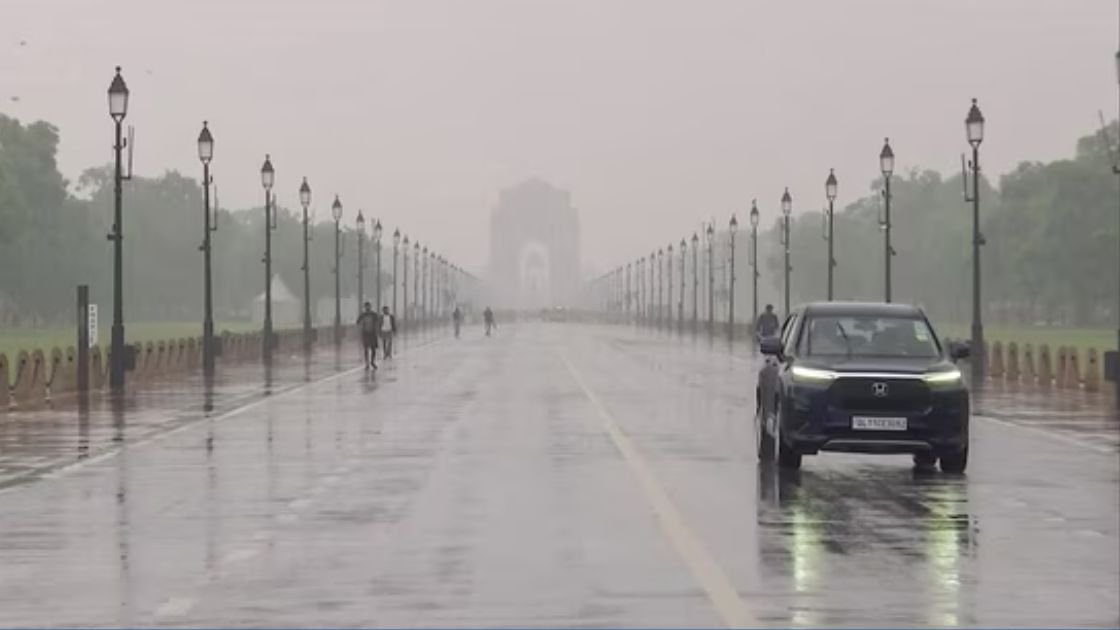
The national capital New Delhi witnessed an unusual dip in temperature on Friday, recording its coldest March day in six years as light rain, thunderstorms, and gusty winds brought back a winter-like chill.
According to the India Meteorological Department (IMD), the minimum temperature settled at 16°C, which is 0.5 degrees below normal, while the maximum temperature dropped sharply to 21.7°C—nearly 9.6 degrees below normal.
The sudden change in weather followed a brief spell of rising temperatures and has made March 2026 one of the wettest in recent years. The city recorded an average rainfall of 9.4 mm, making it the wettest March in the last three years.
The IMD has forecast that cloudy conditions will persist over the coming days, with chances of very light rain, thunderstorms, and lightning early next week. A yellow alert had also been issued, warning of continued weather fluctuations.
Alongside the temperature drop, Delhi’s air quality also showed significant improvement. The Air Quality Index (AQI) was recorded at 93, falling in the ‘satisfactory’ category—its best level in nearly five months.
Weather officials stated that air quality is likely to remain in the ‘moderate’ category in the coming days, even as temperatures gradually begin to rise. The maximum temperature is expected to increase to around 32–34°C by March 25.
The weather system affecting Delhi is also impacting other regions. Light to moderate rainfall and thunderstorms are expected across parts of northern states including Punjab, Haryana, and Uttar Pradesh. Rain and snowfall are also likely in hilly regions such as Himachal Pradesh and Uttarakhand.
Meanwhile, several northeastern states including Assam, Manipur, Mizoram, and Tripura are expected to receive scattered rainfall, along with parts of eastern and southern India.
The recent weather shift has provided temporary relief from rising heat levels, even as the city gradually prepares for the onset of summer.

