



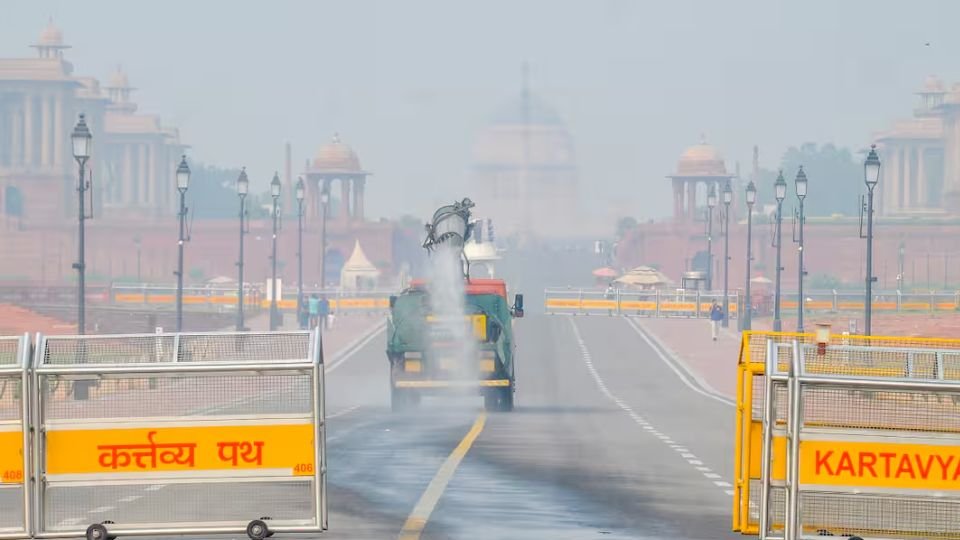
As Delhi continues to battle hazardous air pollution levels, the Chinese embassy has stepped forward with an unusual but welcomed gesture: an offer to share China’s strategies for tackling urban smog. The capital’s Air Quality Index (AQI) remained at life-threatening levels this week—437 on Tuesday afternoon and 370 on Wednesday morning—while Beijing, once known for its choking smog, recorded a comparatively moderate AQI of 68.
Chinese embassy spokesperson Yu Jing posted the contrasting readings on X, noting that both nations have faced significant pollution challenges during rapid urbanisation. “Both China and India know the struggle with air pollution,” Yu wrote, adding that China’s progress is the result of “sustained efforts over the past decade.” The embassy also announced plans to share a short informational series detailing China’s clean-air strategies.
The post immediately sparked a wave of reactions on social media. Many users welcomed the gesture, acknowledging Delhi’s severe and recurring winter pollution crisis. One user suggested China could gift smog towers to the capital, while another urged Beijing to share its pollution-control expertise with South Asia. Some even joked that China should “take over the NCR region” to fix the situation.
Others, however, questioned the embassy’s framing, pointing out that Beijing also struggles with pollution spikes, as shown by AQI readings from different days. Still, the comparison highlighted a stark reality: while Beijing’s air quality has significantly improved over the past decade, Delhi’s remains persistently hazardous.
China’s air-quality turnaround began in 2013 with a nationwide “war on pollution” that set strict targets for reducing PM2.5 levels. Key measures included expanding transparent AQI monitoring systems, phasing out coal in residential heating, switching to cleaner energy sources like natural gas, and imposing tough standards on vehicle emissions. The government also improved public transport systems and restricted private vehicle numbers in major cities.
Delhi’s pollution crisis, meanwhile, continues to be driven by a complex mix of factors—including vehicular emissions, industrial pollution, construction dust, and seasonal stubble burning. Despite multiple action plans and court interventions, implementation gaps and political disagreements have hindered meaningful progress.
As the toxic haze thickens over the capital each winter, China’s offer has reignited debate on whether India can adopt similar large-scale, coordinated pollution-control strategies. With AQI levels repeatedly crossing hazardous limits, the question is not just whether help will be offered—but whether India is prepared to act on it.

