



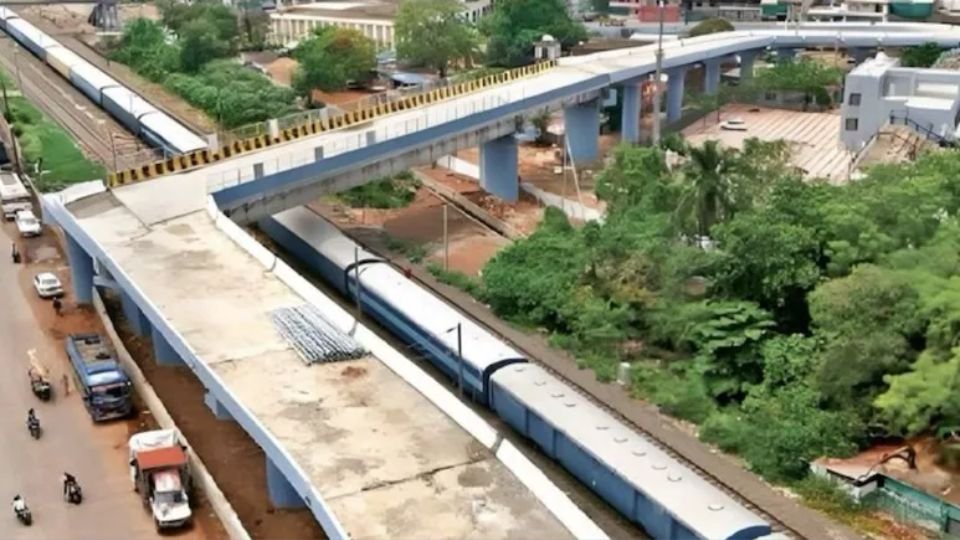
The much-talked-about 90-degree railway overbridge in Bhopal will finally be redesigned after months of criticism over its unsafe design.
The bridge, located in the Aishbagh area, had drawn attention across the country because of its sharp 90-degree turn, which many people called dangerous and unfit for use.
The issue has now been resolved after a meeting between the Public Works Department (PWD) and the Railways, ending a nearly 10-month-long dispute between the two agencies.
The main problem with the bridge was the extremely tight turn, which made it difficult and risky for vehicles to pass. There were concerns that cars or larger vehicles could skid or overturn, even before the bridge was opened.
According to officials, the design will now be corrected. The curve will be widened, with its radius increased from about 2 metres to around 2.5 metres. The width of the bridge will also be expanded from 8.5 metres to around 10.5–11 metres, making it safer for both small and heavy vehicles.
Work on the redesign is expected to start within the next few days after final approval from railway authorities. The same company that built the bridge has been given the task of fixing it.
The overbridge was built at a cost of around ₹18 crore and was completed in June 2025, but it was never opened to the public due to safety concerns.
Just before its planned inauguration, pictures of the sharp turn went viral, leading to widespread criticism, memes, and questions about how such a design was approved.
Following the backlash, seven PWD engineers were suspended, and expert agencies, including MANIT, were asked to study the structure and suggest changes.
Officials later said that the presence of a nearby Metro line had limited the design space, making it difficult to build a wider curve. This led to delays and disagreements between departments.
Now, after months of delay and public criticism, authorities say the issue has been resolved and the bridge will be made safe for use.
However, for many residents of Bhopal, the bigger concern remains how such a major project, built with public money, was approved despite such a serious design flaw.

