



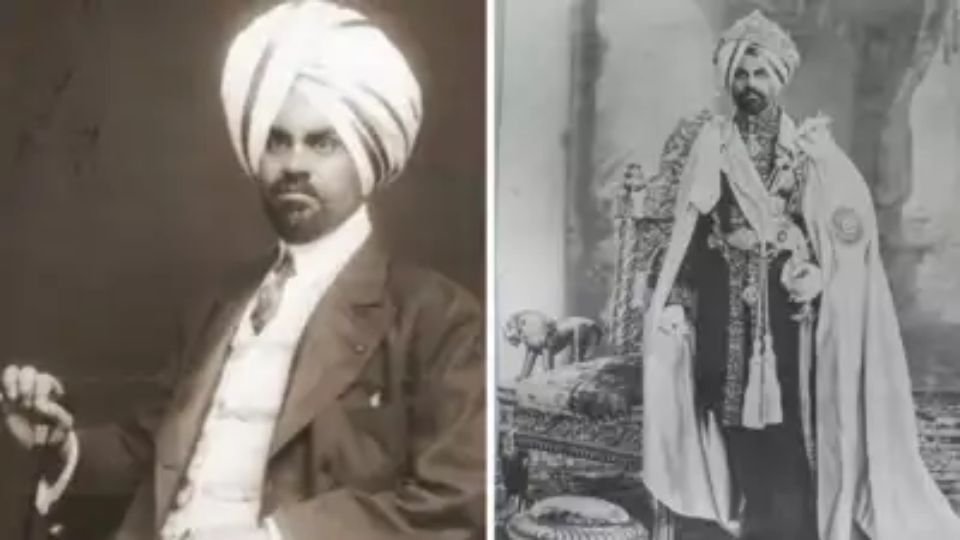
Long before luxury boutiques lined Indian high streets, Indian royalty had already mastered the art of elite global taste. Among the most discerning of them was Maharaja Jagatjit Singh, whose relationship with Louis Vuitton quietly helped cement the brand’s reputation as luggage fit for kings.
In the early 1900s, when international travel still meant steamships, long rail journeys and horse-drawn carriages, carrying one’s wardrobe safely was a challenge even for Europe’s aristocracy. For Indian maharajas—who travelled with ceremonial attire, jewels, turbans, swords and tailored suits—it required something more than ordinary trunks. Jagatjit Singh found that solution in Paris.
He first travelled to France as a teenager and was immediately drawn to European culture, architecture and craftsmanship. The influence stayed with him for life. His palace in Kapurthala would later mirror the grandeur of Versailles, and his personal style reflected the same Francophile sensibility.
At the time, Louis Vuitton had already begun transforming the world of travel. Founded in 1854 by a young trunk-maker who revolutionised luggage with flat-topped, stackable designs, the brand became synonymous with practicality wrapped in prestige. Its innovation appealed strongly to globetrotting royalty, and Indian rulers were among its earliest elite patrons.
Jagatjit Singh was not alone. Sayajirao Gaekwad III of Baroda was another Indian royal who embraced Louis Vuitton’s bespoke trunks in the same era. But it was the Maharaja of Kapurthala who took his loyalty to extraordinary levels.
By the early 20th century, he reportedly owned over 60 customised Louis Vuitton trunks, each designed for a specific purpose. There were trunks for shoes, ceremonial outfits, European suits, jewels, turbans and even weaponry. Nothing was left to chance. Every compartment had a function, every trunk carried the now-legendary LV monogram, introduced in 1896.
These were not accessories. They were symbols of authority, wealth and global sophistication. When stacked together, the trunks themselves became a travelling exhibition of power and taste.
What makes this association remarkable is timing. Louis Vuitton officially entered the Indian retail market only in 1999, nearly a century after Indian maharajas had already turned it into a status symbol. By today’s standards, a single Louis Vuitton trunk costs anywhere between ₹49.5 lakh and ₹99.5 lakh. Adjusted to modern values, the Maharaja’s collection would easily be worth ₹30–60 crore.
Yet for Jagatjit Singh, luxury was never about excess alone. It was about craftsmanship, organisation and refinement. His fascination with Louis Vuitton reflected his broader worldview—one that blended Indian royalty with European elegance long before globalisation made such cross-cultural taste common.
Today, when Louis Vuitton trunks are displayed in museums and auction houses as heritage pieces, their royal legacy owes much to an Indian Maharaja who believed that even travel deserved grandeur.

