



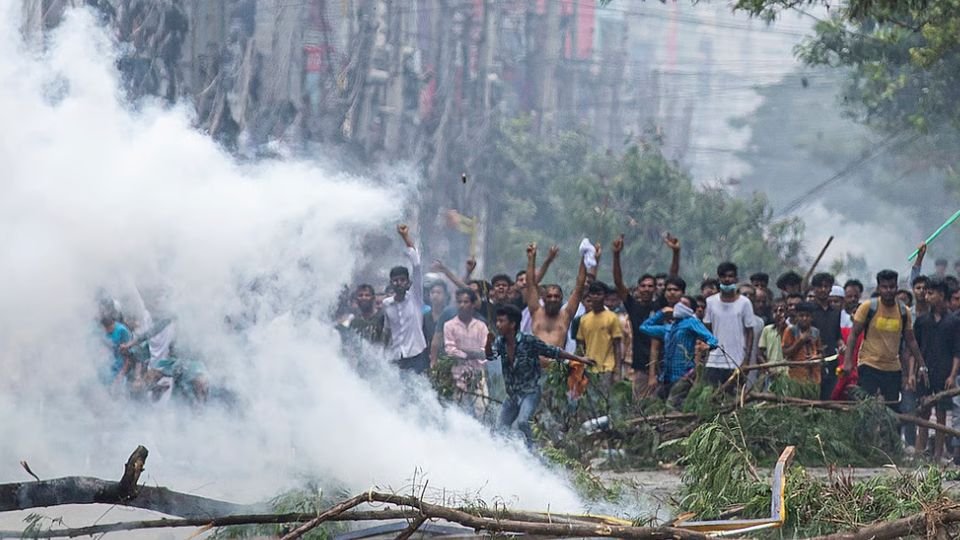
Bangladesh witnessed a fresh wave of violent protests overnight following the death of Sharif Osman Hadi, a polarising youth leader whose rise to prominence during the 2024 student uprising reshaped the country’s political landscape. Hadi, 32, who became widely known for his fiery speeches and strong anti-India rhetoric, died in a Singapore hospital after being shot in the head by masked gunmen last week while launching his election campaign in Dhaka.
The news of his death triggered massive demonstrations in Dhaka and several other cities as thousands of supporters flooded the streets demanding justice. Clashes erupted in multiple areas, and authorities reported that several buildings—including offices of Bangladesh’s leading newspapers The Daily Star and Prothom Alo—were set ablaze. Firefighters struggled to rescue trapped staff members as flames engulfed parts of the structures.
Tensions escalated outside the Indian Assistant High Commission in Chittagong, where large crowds gathered and raised anti-India slogans, underscoring Hadi’s influence on public sentiment and the geopolitical sensitivities surrounding his activism.
Protesters accused the government of failing to protect opposition figures and vowed to continue their movement until the attackers are identified and arrested. Emotional chants invoking Hadi’s name echoed through the streets as demonstrators lit torches and waved banners condemning political violence.
Security forces, including additional police and paramilitary units, were deployed across key districts in an effort to restore order. Several neighbourhoods remained on high alert late into the night, with authorities bracing for further unrest.
Officials have yet to provide details on the status of the investigation or the motive behind Hadi’s assassination. His death comes at a volatile moment for Bangladesh, still grappling with political instability in the wake of the student-led uprising that toppled former Prime Minister Sheikh Hasina.
As the country faces growing public fury, pressure is mounting on the interim government to deliver accountability and prevent the unrest from spiralling further.

