



New Delhi:
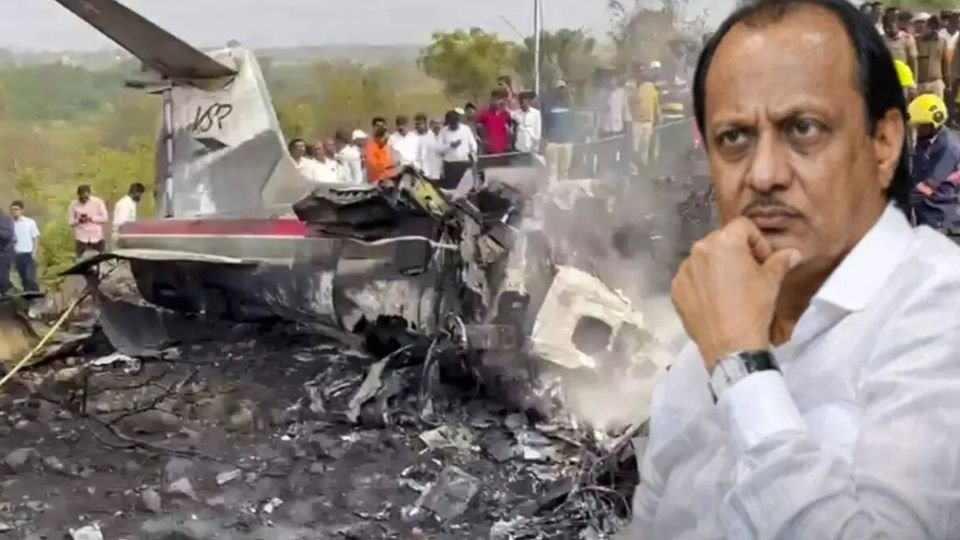
Investigators probing the fatal aircraft crash in Maharashtra’s Baramati have revealed chilling details from the cockpit moments before impact. According to officials familiar with the investigation, the final words recorded from the flight crew were an alarmed exclamation — “oh s***” — heard seconds before the aircraft went down.
The crash claimed the lives of five people, including Maharashtra Deputy Chief Minister Ajit Pawar, during a landing attempt on Wednesday morning.
Learjet Crashes During Second Landing Attempt
The ill-fated aircraft, a Learjet 45 operated by Delhi-based VSR Ventures Pvt Ltd, was attempting to land at Baramati’s table-top airstrip when the accident occurred at approximately 8:45 am. On board were Pawar, his personal security officer, an attendant, and two cockpit crew members — pilot-in-command Sumit Kapur and first officer Shambhavi Pathak.
All five occupants were killed in the crash.
DGCA Official Details Critical Communication Gap
A senior official from the Directorate General of Civil Aviation (DGCA) stated that cockpit voice recordings captured the crew’s last reaction moments before the aircraft burst into flames near the runway threshold.
The official also confirmed that air traffic services at Baramati are managed by trainee pilots from two local private aviation academies — Redbird Aviation and Carver Aviation — who were in contact with the flight crew during the approach.
Timeline: What Happened Before the Crash
The Civil Aviation Ministry has released a detailed sequence of events leading up to the tragedy, highlighting a potentially serious lapse in communication.
At 8:18 am, the aircraft, registered as VT-SSK, established contact with Baramati airport. The crew was briefed about prevailing weather conditions and informed that landing could be attempted at their discretion.
Both pilots sought details regarding wind speed and visibility. They were informed that visibility stood at approximately 3,000 metres, a range generally considered adequate for landing.
Go-Around Ordered After Runway Not in Sight
During the initial final approach to Runway 11, the pilot informed ground control that the runway was not visible. Air traffic control instructed the crew to execute a go-around, a standard safety procedure when visual contact with the runway is lost.
After repositioning, the pilots again reported being on final approach and confirmed that the runway was now visible.
Landing Clearance Given, But No Readback
At 8:43 am, air traffic control cleared the aircraft to land. However, the ministry’s statement noted a crucial anomaly — the pilots did not provide a readback confirming the landing clearance.
Just a minute later, at 8:44 am, air traffic controllers observed flames near the threshold of Runway 11, marking the moment of the crash.
AAIB Launches Forensic Investigation
A specialised team from the Aircraft Accident Investigation Bureau (AAIB) reached the crash site later in the evening to begin a detailed forensic and technical investigation. Authorities are expected to analyse cockpit voice data, flight parameters, and ground communication logs to determine the exact cause of the accident.
Further findings are awaited as investigators continue examining what led to one of the most tragic aviation incidents in recent times.

