



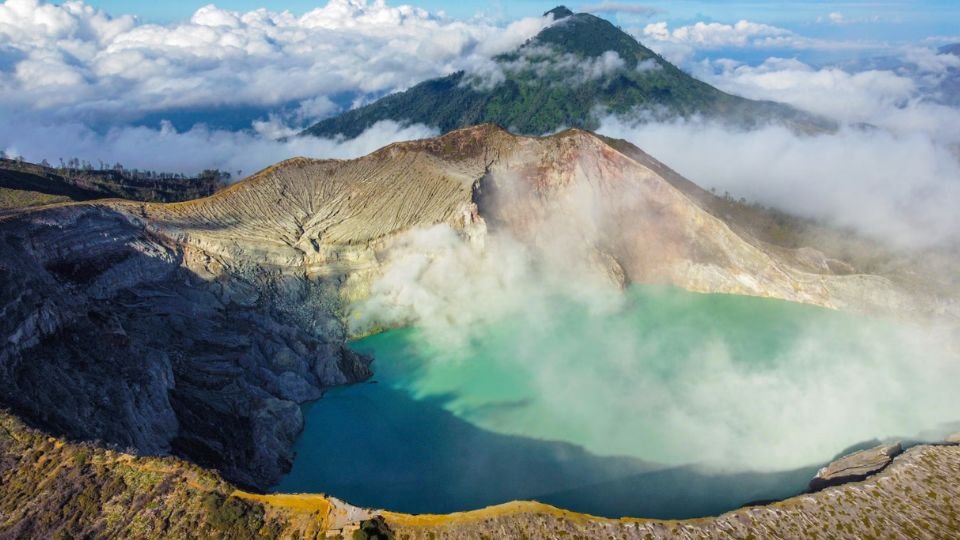
Indonesia is often celebrated for its beaches, temples and rainforests, but some of its most striking landscapes are also among the most dangerous. On the island of Java lies Kawah Ijen, a site where breathtaking beauty coexists with extreme risk, making it one of the most unusual natural wonders on the planet.
Nestled in East Java, Kawah Ijen is part of an active volcanic complex and is home to what scientists describe as the most acidic crater lake in the world. The lake’s water carries an acidity level so extreme that it rivals industrial chemicals. Contact with it can cause severe burns, and even metal objects corrode rapidly when exposed to it. This alone makes the lake lethal, but the dangers extend far beyond the water itself.
What first captivates visitors is the lake’s surreal colour. From above, it appears a vivid turquoise or greenish blue, almost unreal in contrast to the surrounding rocky slopes. This striking shade is caused by dissolved minerals and volcanic gases rising from molten magma beneath the surface. The intensity of the colour is so strong that the lake can be detected in satellite imagery.
The threat, however, is constant. Volcanic vents around the crater release toxic gases such as sulphur dioxide and hydrogen sulphide. Without protective gear, breathing these fumes can quickly become fatal. Sudden shifts in wind direction can trap gas inside the crater, turning the area into a natural gas chamber. For this reason, visitors are advised to wear masks and limit their exposure time.
Kawah Ijen is also famous for a phenomenon rarely seen anywhere else in the world: electric-blue flames that light up the crater at night. These are not lava flows but burning sulphuric gases that ignite upon contact with oxygen. The flames can reach temperatures of around 600 degrees Celsius and are most visible in complete darkness, which is why hikes typically begin before dawn.
Despite the hostile environment, human life persists here. Local miners descend into the crater daily to extract solid sulphur. Using simple tools, they break bright yellow sulphur deposits and carry loads weighing up to 50 kilograms along a steep trail that stretches several kilometres. The work is physically punishing and dangerous, yet it remains a crucial source of income for many families in the region.
Tourism continues to grow despite the risks. Hundreds of visitors arrive each day, drawn by the blue fire and the lake’s haunting beauty. Guided treks, safety briefings and rented gas masks have become part of the experience, though conditions can change rapidly and unpredictably.
Kawah Ijen is a place of sharp contrasts. Lush green hills surround a lake that can destroy on contact. Mesmerising blue flames rise from vents that emit deadly gas. It is neither calming nor forgiving, but it offers a rare glimpse into the raw power of the Earth. For those who approach it with caution and respect, the crater stands as a stark reminder that nature’s most beautiful creations can also be its most dangerous.

