



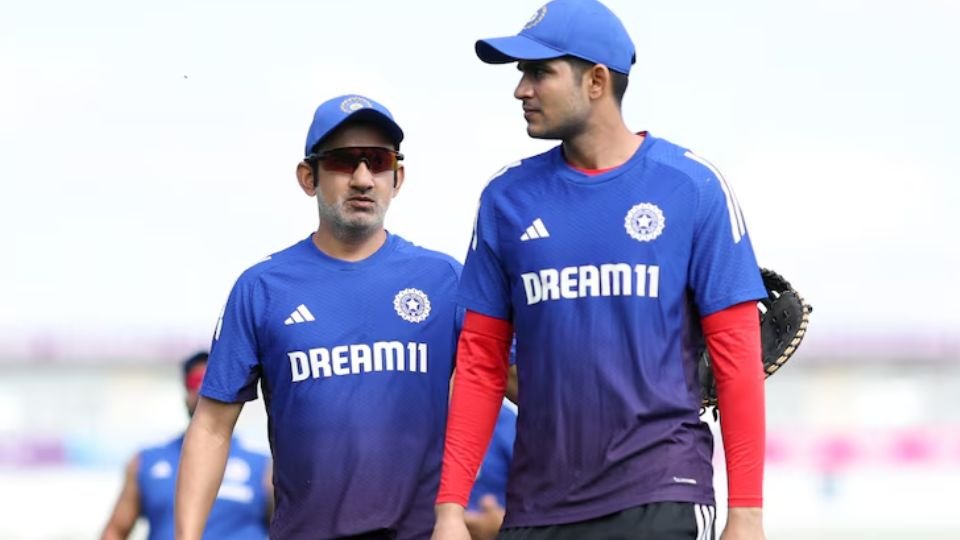
New Delhi: India’s Test captain Shubman Gill has triggered widespread discussion in the cricketing world after formally requesting the BCCI to grant the national team a 15-day practice window before every Test assignment, a move being viewed as a structural shift in India’s red-ball preparation model.
India’s Test performance has faced a steep slide over the past year, marked by series defeats to New Zealand, Australia and England, leaving the team on the edge of elimination from the World Test Championship (WTC) cycle. The string of losses has pushed India’s traditional dominance in the longest format into question, prompting conversations around leadership, scheduling load, and preparation gaps.
According to reports, Gill’s message to the board emphasises the need for dedicated conditioning and practice camps before red-ball tours, particularly given India’s current challenge of moving rapidly between continents and formats, where preparation cycles are often compromised by overlapping white-ball commitments, IPL windows, and commercial cricketing calendars.
Former India batter Robin Uthappa publicly lauded Gill’s demand, describing it as a bold leadership decision that prioritises respect for Test cricket over traditional compressed scheduling. In a detailed YouTube segment, Uthappa supported the idea of at least two weeks of red-ball training before each Test series, noting that winning the WTC requires more than simply playing matches — it requires planning, building, and preparing with intent.
Backing the decision, commentator Aakash Chopra also echoed Gill’s sentiment, saying India is not financially dependent on additional fixtures and that a strong board like the BCCI can afford to carve out preparation windows for long-format success. He further stressed that lack of adequate practice would make the board partly responsible for failures, especially when the team transitions between drastically different formats with minimal reset time.
Aakash Chopra also highlighted the growing imbalance created by packed cricket calendars. “It’s unfortunate that you are jumping from one continent to another and playing different formats. The demands are very different. If the preparation is not good and they fail, it’s also a function of you not preparing well,” he said on the Backstage with Boria platform.
Cricket analysts say the decision also reflects a new era of leadership voices emerging from younger captains, demanding format-specific autonomy, conditioning cycles, and strategic clarity in contrast to India’s historically fragmented approach toward red-ball build-ups.
The conversation is now shifting toward whether the BCCI will restructure its calendar to accommodate a Test-first preparatory policy, especially with the WTC cycle tightening, India’s ranking prestige at stake, and a generational captain publicly calling for systemic change rather than individual blame.
The verdict from the cricketing ecosystem is unanimous on one thing: India’s red-ball reset may begin not on match day, but 15 days before it.

