



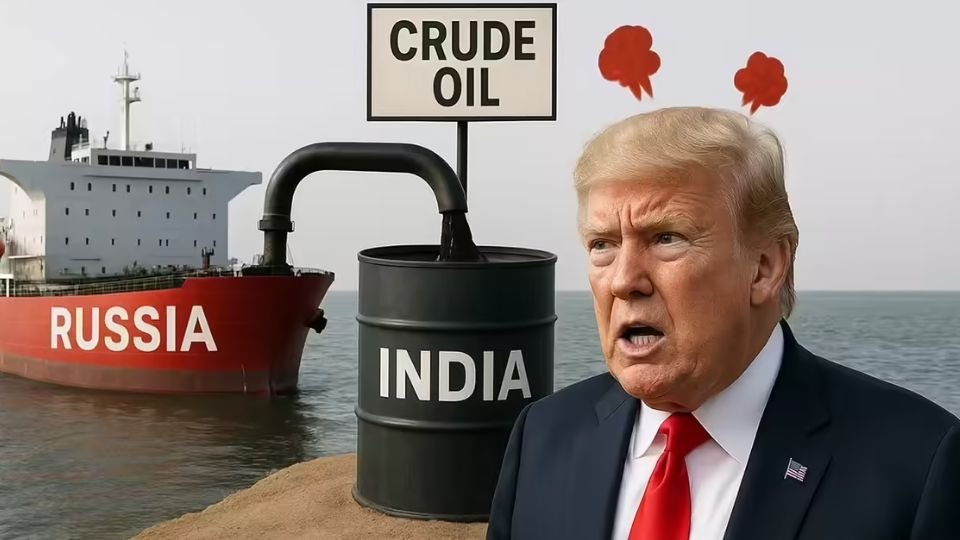
New Delhi: US President Donald Trump has again put India on notice, saying Washington could impose fresh tariffs if New Delhi continues purchasing Russian oil without aligning with US concerns. Speaking to reporters aboard Air Force One on Sunday, the US President remarked that Prime Minister Narendra Modi was aware of his displeasure regarding India’s energy trade with Russia.
“We could raise tariffs on India if they don’t help on the Russian oil issue,” Trump said, adding that India had already cut down a significant portion of its crude imports from Russia in recent months. He further praised PM Modi personally, saying, “He’s a very good man… He knew I was not happy. It was important to make me happy. They do trade, and we can raise tariffs on them very quickly.”
The warning comes at a time when India has continued to justify its oil trade with Russia as a strategic necessity to meet domestic energy demand, amid mounting debate in the US over India’s neutral stance on Russian energy markets.
Trump’s remarks also follow a recent phone call between the two leaders, where both sides attempted to keep negotiations active despite tariff tensions. The call reportedly aligned with a fresh round of high-level trade discussions between Indian and US officials, aimed at resolving a prolonged bilateral trade deadlock.
Trade negotiations earlier this year were stalled after the US levied tariffs on Indian goods up to 50%, which disrupted momentum and pushed both countries back into renewed bargaining.
Amid ongoing talks, the US Embassy in India amplified Trump’s earlier praise for PM Modi in a social media post, where he called India an “amazing country,” and referred to Modi as “a great friend and an important strategic partner in the Indo-Pacific region.”
Meanwhile, the global oil narrative has also regained political urgency following recent US actions in Venezuela — a country that holds over 303 billion barrels of proven crude reserves, the largest in the world. According to OPEC estimates, Venezuela’s reserves account for nearly 17% of global proven oil supply, though production has dropped to around 1 million barrels per day due to sanctions and underinvestment.
With oil diplomacy now central to global trade equations, the Supreme Court’s reading of verdicts, tariff debates, and energy negotiations continue to underline a shifting geopolitical phase between India and the United States.

