



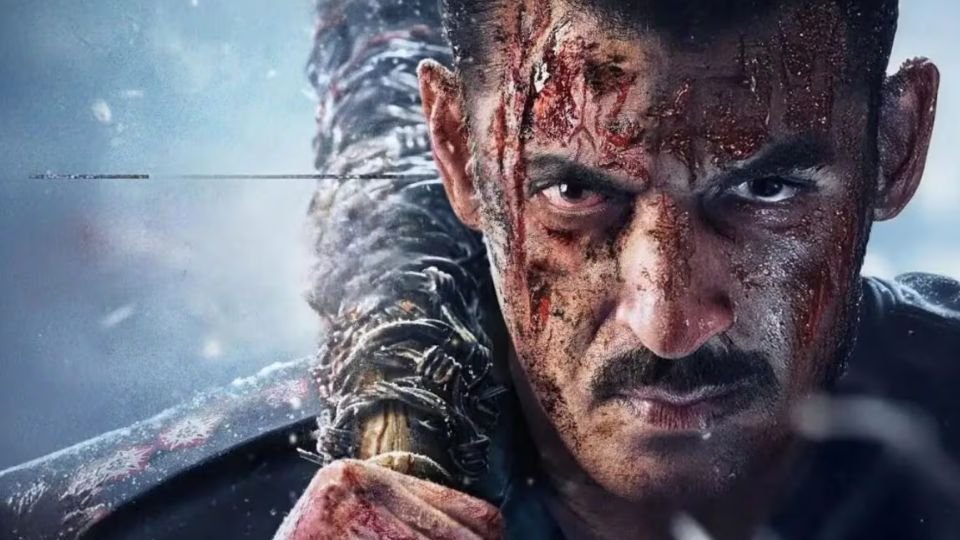
The recently released teaser of Salman Khan’s war drama Battle of Galwan has ignited a diplomatic-cultural row, with Chinese state media sharply criticising the film’s portrayal of the 2020 clash between Indian and Chinese troops along the Line of Actual Control (LAC). The film, directed by Apoorva Lakhia and featuring Chitrangada Singh, Zeyn Shaw, Ankur Bhatia and Vipin Bhardwaj alongside Khan, centres on the bravery of Colonel Bikkumalla Santosh Babu of the 16 Bihar Regiment.
China’s state-run Global Times published a strongly worded article dismissing the film as factually inaccurate and overly sensationalised. Citing unnamed “experts,” the piece argued that Bollywood productions are entertainment-driven and warned that no cinematic depiction can “rewrite history or shake the PLA’s determination to defend China’s sovereign territory.” The commentary reiterated Beijing’s longstanding position that the Galwan Valley is on the Chinese side of the LAC—a claim that contradicts Indian accounts and geographic classifications.
The Global Times also accused India of exaggerating casualty figures from the Galwan clash. New Delhi has officially confirmed the loss of 20 Indian soldiers during the brutal hand-to-hand combat in June 2020. Beijing has previously offered varying figures, once denying any casualties and later acknowledging four, figures widely seen internationally as underreported.
In addition to questioning the facts, the article criticised India’s use of patriotic films, suggesting that Bollywood has a tradition of stirring national sentiment. “No matter how ‘over-the-top’ a drama may be, a nation’s sacred territory will never be affected by a film,” quoted Chinese military commentator Song Zhongping.
Indian voices in the film and entertainment community swiftly rebutted the critique. Filmmaker Ashoke Pandit told media outlets that it was expected for global rivals to feel uneasy when Indian cinema highlights sensitive historical events. “We as a nation are strong, and our security forces are brave. China’s reaction reflects its own insecurities,” he said.
Actor-producer Rahul Mitra also defended the filmmakers, noting that Battle of Galwan was built on detailed research—a fundamental aspect of good storytelling. Mitra criticised the Global Times for labelling the film as a “nationalist melodrama,” arguing that filmmaking is rigorous and not an exercise in distortion.
The dispute illustrates how cultural products such as films can become entangled in geopolitics, particularly when they depict real-world conflicts. As Battle of Galwan prepares for wider release, the comments from Chinese media have only added to the conversation about national memory, artistic expression and the politics of representation in cinematic portrayals of historical events.

