



Russian President Vladimir Putin began the second day of his visit to India with preparations for the 23rd India–Russia Annual Summit, following an unusually warm and protocol-breaking welcome from Prime Minister Narendra Modi the previous evening. Putin arrived in New Delhi on Thursday for his first visit to India since the Russia–Ukraine conflict began, marking a significant moment for bilateral engagement amid shifting global dynamics.
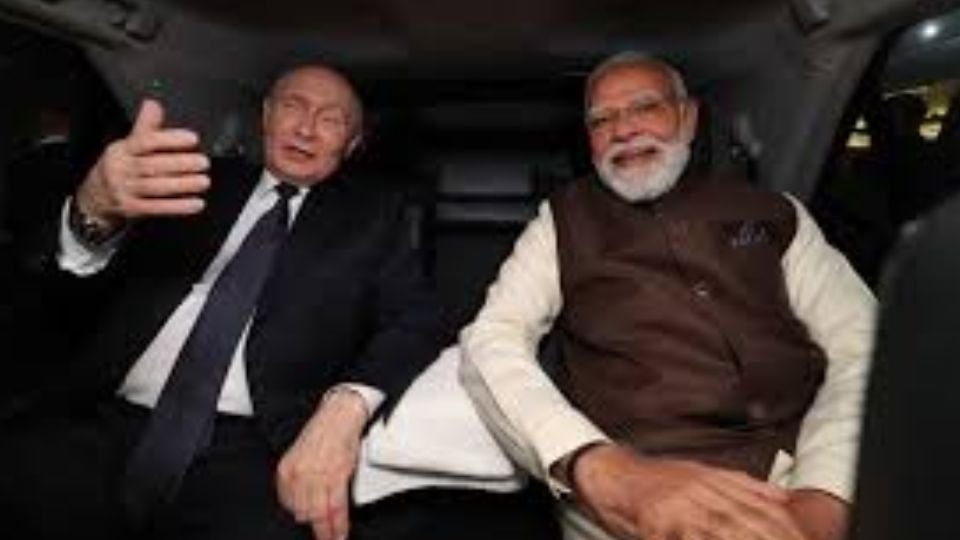
In a rare gesture, PM Modi personally arrived at the Palam Technical Airport to receive Putin, bypassing standard security protocol. The two leaders exchanged smiles, hugged and then travelled together in the same car, a moment that instantly drew global attention. Their conversation-filled drive to the prime minister’s residence at 7 Lok Kalyan Marg set the tone for a friendly and strategic dialogue. The scene echoed their earlier car ride during the SCO Summit in Tianjin, China, reinforcing the personal rapport the two leaders share.
Putin’s visit comes at a sensitive moment for India’s foreign policy. New Delhi and Washington are currently navigating tensions over the United States’ decision to impose steep tariffs—up to 50%—on Indian imports. Many of these penalties were linked to India’s continued energy trade with Russia, a relationship Washington opposes as part of its broader strategy against Moscow. Analysts say Putin’s presence in India highlights Moscow’s intention to maintain strong ties with New Delhi despite Western pressure.
In an interview during the visit, Putin defended India’s right to buy fuel from Russia, pointing out that the United States itself continues to purchase nuclear fuel from Russia for its power plants. He questioned why India should be expected to curb purchases when even Washington maintains certain energy links with Moscow.
As the second day begins, Putin and Modi are set to engage in multiple rounds of discussions, covering trade, defence cooperation, energy security, and global geopolitical challenges. The summit is expected to reaffirm the longstanding partnership between the two countries while addressing the complex diplomatic landscape shaped by the Ukraine conflict and global economic tensions.

