



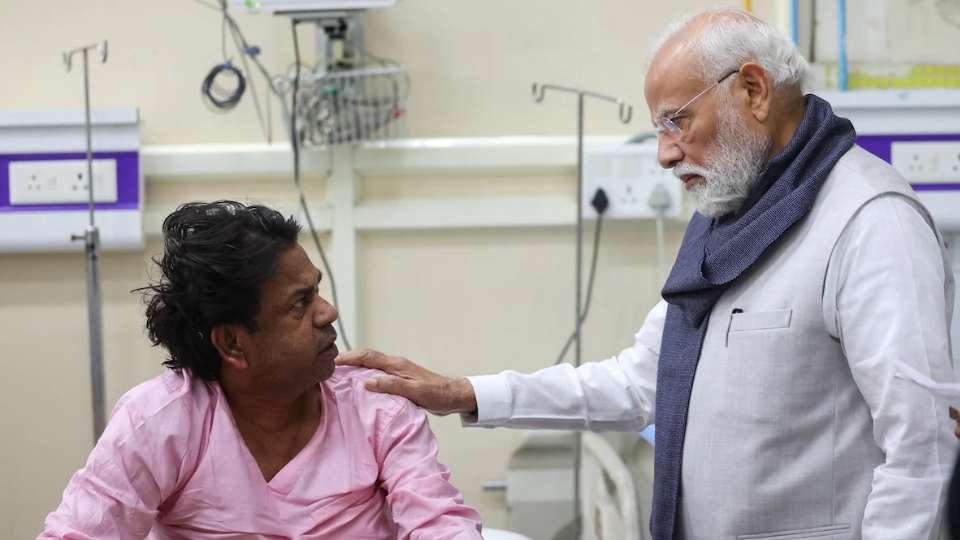
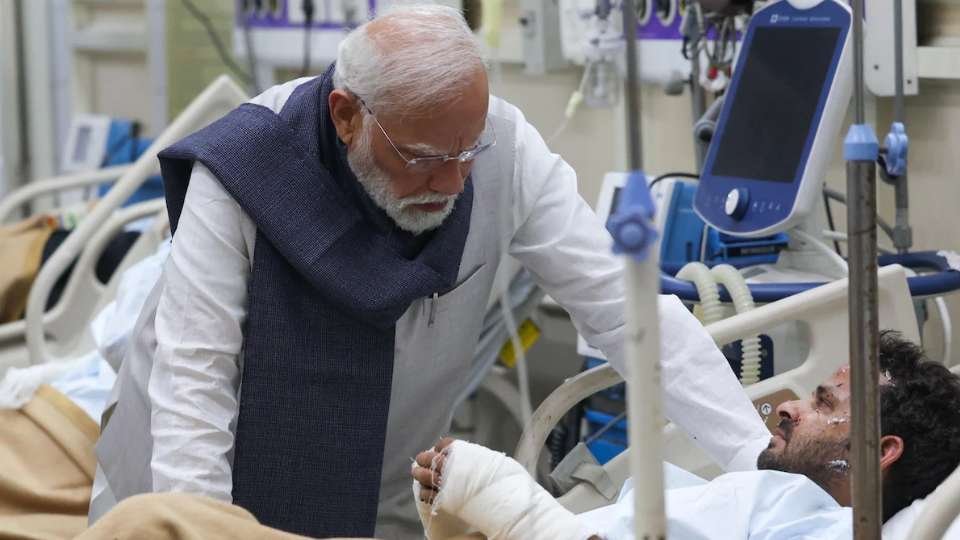
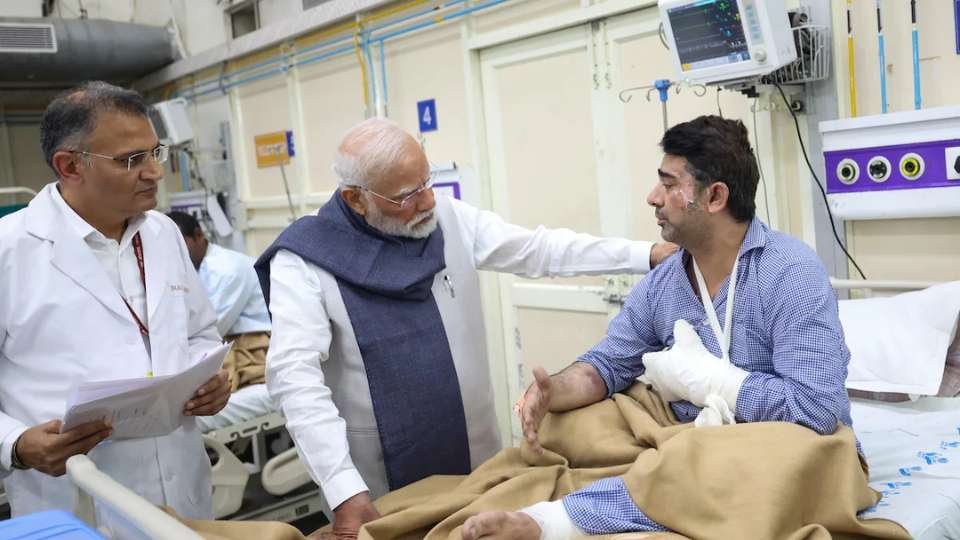
Prime Minister Narendra Modi on Wednesday visited the victims of the deadly blast near Delhi’s Red Fort at Lok Nayak Hospital, shortly after returning from his two-day visit to Bhutan.
Security was tightened around the hospital during the visit, with senior officials from Delhi Police and hospital administration present.
The powerful explosion, which occurred around 6:50 pm on Monday, tore through a white Hyundai i20 car near the iconic Red Fort, killing nine people and injuring 20 others. The blast, which took place during evening rush hour, left several vehicles gutted and caused widespread panic in the area.
The explosion came just hours after investigators uncovered a “white-collar” terror module linked to the banned groups Jaish-e-Mohammed and Ansar Ghazwat-ul-Hind. The network, spread across Jammu and Kashmir, Haryana, and Uttar Pradesh, allegedly involved radicalised professionals, including doctors and university staff.
Eight people, including three doctors, were arrested in connection with the case, and over 2,900 kilograms of explosives were seized during simultaneous raids. Among those detained were Dr Muzammil Ganaie and Dr Shaheen Sayeed, both affiliated with Al Falah University in Faridabad, where 360 kg of ammonium nitrate was recovered.
The university, located in Dhouj, around 45 km from Delhi, is a private institution recognised by the University Grants Commission (UGC).
Dr Umar Un Nabi, a doctor from Jammu and Kashmir’s Pulwama and associated with Al Falah University, is believed to have been behind the wheel of the car that exploded. Officials suspect he died in the blast.
According to investigators, Dr Ganaie and Dr Nabi conducted reconnaissance of the Red Fort area days before the attack. They had allegedly planned to strike a crowded market during Diwali but postponed their plans. Sources suggest they were also exploring the possibility of an attack on Republic Day.
Preliminary forensic findings indicate that an explosive compound known as ANFO—made of ammonium nitrate and fuel oil—was packed into the car and detonated using a manual trigger, suggesting a possible suicide bombing.
Officials said traces of high-grade explosives were also found at the site, with one of the samples believed to be significantly more powerful than ammonium nitrate.
The National Investigation Agency (NIA) has taken over the probe into the blast and is coordinating with Delhi Police and intelligence agencies to trace the wider network behind the attack.

